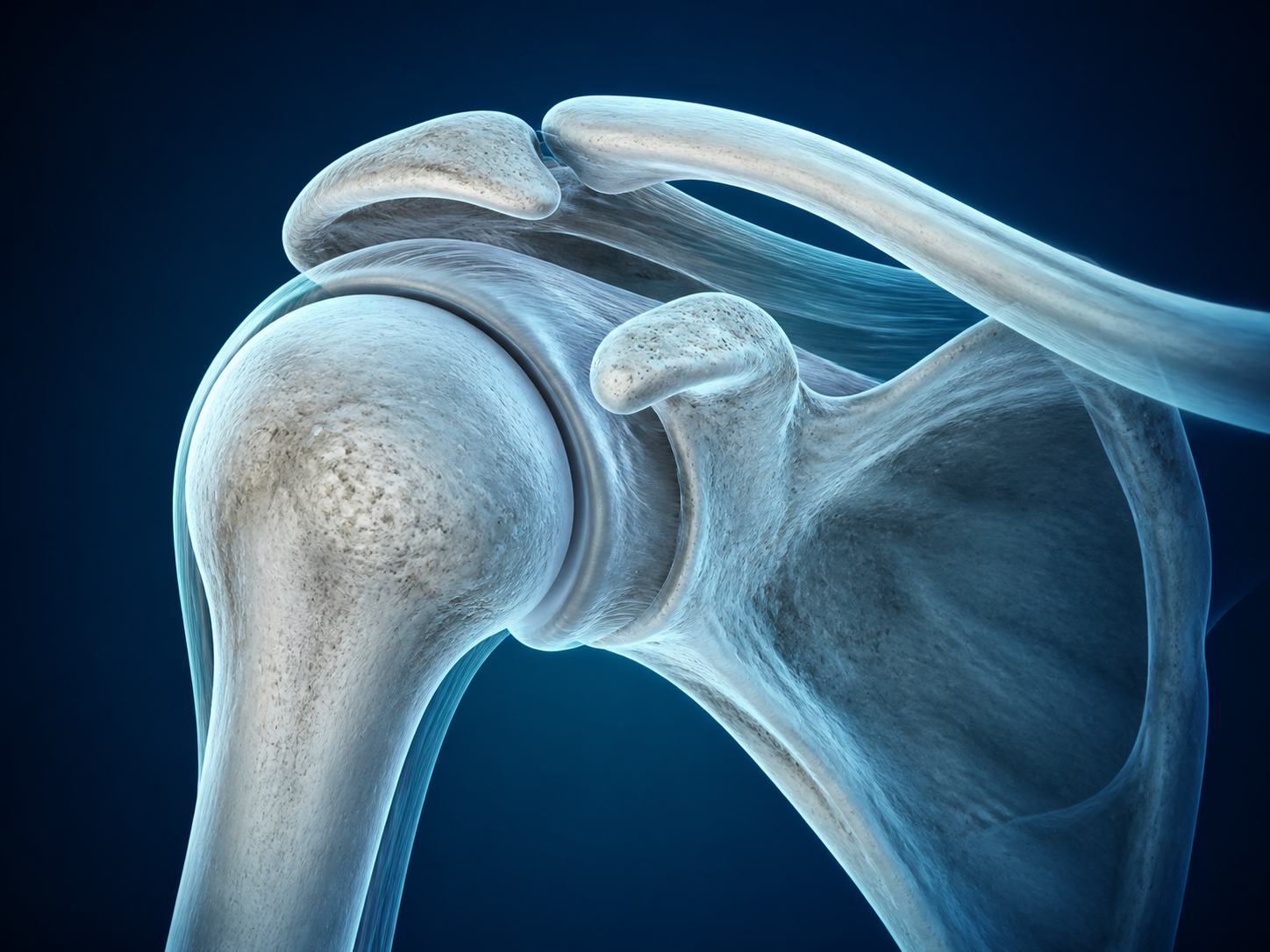
Shoulder pain limits sleep, work and sport long before it limits movement. A detailed clinical examination combined with imaging identifies whether the problem is the rotator cuff, the labrum, the joint capsule or the bone — and treatment is planned accordingly, with surgery reserved for cases that need it.
Conditions we treat
- Rotator cuff tears and tendinitis
- Recurrent shoulder dislocation
- SLAP and Bankart lesions
- Frozen shoulder (adhesive capsulitis)
- Shoulder impingement
- AC joint injuries
How it works — what to expect
- 1
Consultation & examination
A detailed history and hands-on clinical examination to identify the exact structure causing pain, instability or stiffness.
- 2
Imaging & diagnosis
X-rays, and where needed an MRI or CT scan, to confirm the diagnosis and plan treatment precisely.
- 3
Injection or physiotherapy trial
Impingement and frozen shoulder often respond to a guided injection combined with a structured stretching programme.
- 4
Arthroscopic repair
The cuff tendon is re-anchored to bone, or the labrum repaired, through key-hole portals under regional anaesthesia.
- 5
Milestone-based rehabilitation
A sling for protection, then passive movement, active movement and finally strengthening as healing allows.
Procedures offered
Arthroscopic rotator cuff repair
The torn tendon is re-attached to bone with anchors through key-hole portals, protecting the surrounding muscle.
Bankart repair / Latarjet
Stabilisation surgery for recurrent dislocation, chosen based on the amount of bone loss.
Capsular release
For stiff, resistant frozen shoulder that has not responded to physiotherapy and injections.
Recovery & rehabilitation
Shoulder tendon healing to bone is slower than skin healing, so the first six weeks protect the repair while a therapist moves the joint for you.
Active movement is introduced once the repair is secure, and strengthening only after full passive range is regained. Rushing this sequence is the main cause of re-tear.
Recurrent dislocation surgery follows a similar staged path, with contact sport deferred until the stabilised shoulder is strong in end-range positions.
- Week 0–4: sling, passive range, elbow and hand exercises
- Week 4–8: active-assisted then active movement
- Week 8–12: strengthening begins
- Month 4–6: overhead loading and sport-specific work