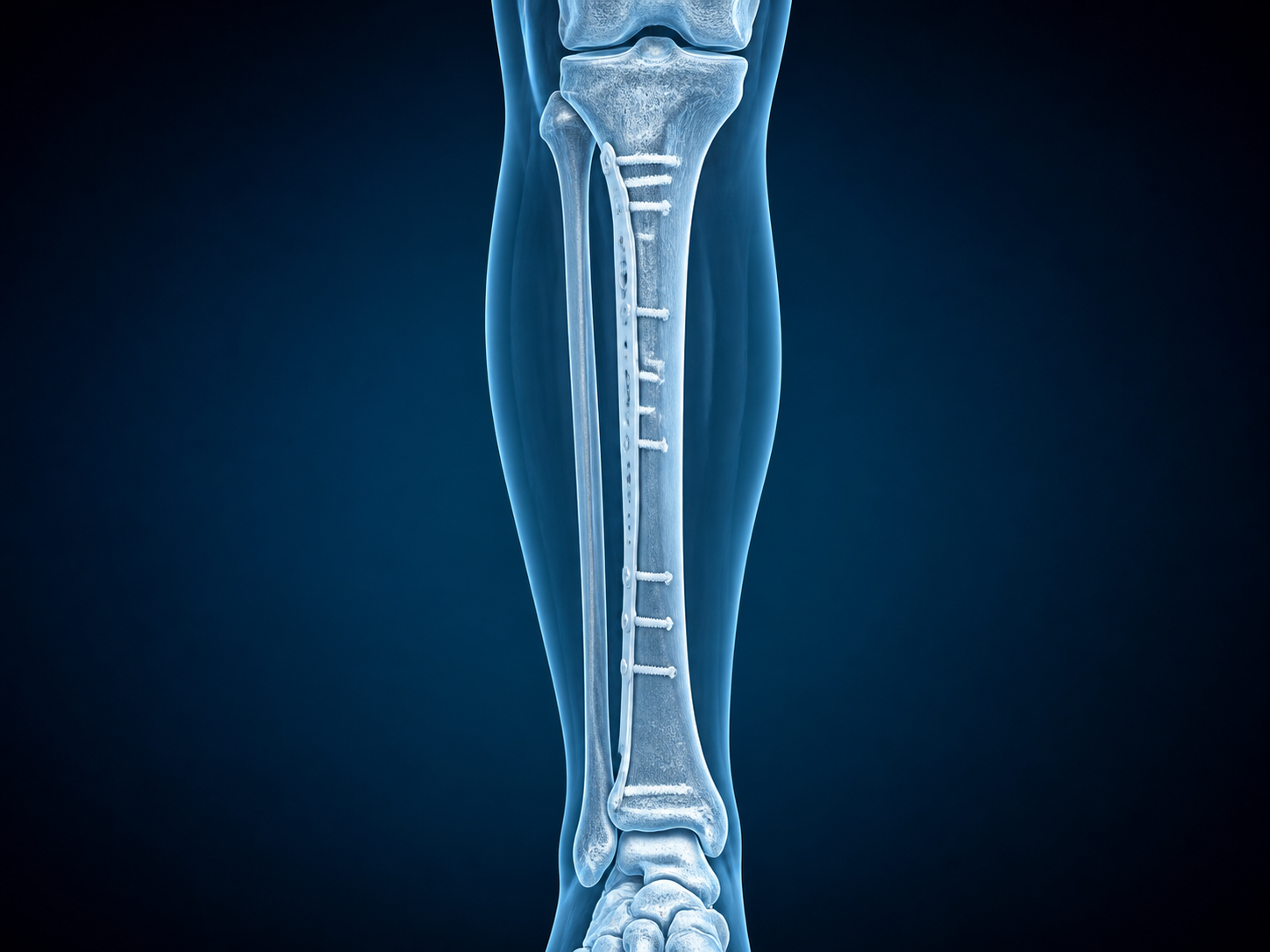
Fractures heal best when they are reduced accurately and stabilised appropriately. Training as Senior Resident at the Sanjay Gandhi Institute of Trauma & Orthopaedics brings high-volume trauma experience to every case — from simple wrist fractures to complex multi-limb injuries.
Conditions we treat
- Simple and complex fractures
- Poly-trauma injuries
- Non-union and malunion
- Sports fractures and stress fractures
- Spine injury assessment
- Post-operative complications and revisions
How it works — what to expect
- 1
Emergency assessment
Rapid evaluation of the injury, associated injuries and circulation, with immediate splinting and pain relief.
- 2
Imaging & diagnosis
X-rays, and where needed an MRI or CT scan, to confirm the diagnosis and plan treatment precisely.
- 3
Fixation or conservative care
Stable fractures are treated in a cast or brace; displaced and unstable fractures are fixed with plates, nails or screws.
- 4
Early mobilisation
Secure fixation allows joints to be moved early, which prevents stiffness and speeds functional recovery.
- 5
Union monitoring
Serial X-rays track healing; non-union and malunion are addressed with bone grafting or corrective surgery when needed.
Procedures offered
Plate and nail fixation
Stable internal fixation that allows early movement and prevents joint stiffness.
Minimally invasive fixation
Soft-tissue-friendly techniques that reduce infection risk and speed up recovery.
Non-union surgery
Bone grafting and re-fixation for fractures that have failed to heal.
Recovery & rehabilitation
Fracture care is about more than bone healing — the goal is a limb that works. Fixation is chosen to allow the nearby joints to move as early as it is safe to do so.
Nutrition, vitamin D, smoking cessation and diabetes control all influence how quickly a fracture unites.
For injuries treated elsewhere that have not healed or have healed crookedly, a second opinion with fresh imaging clarifies whether corrective surgery will help.
- Week 0–2: swelling and pain control, wound care
- Week 2–6: protected movement of adjacent joints
- Week 6–12: progressive weight-bearing as union appears
- Month 3–6: strengthening and return to work or sport