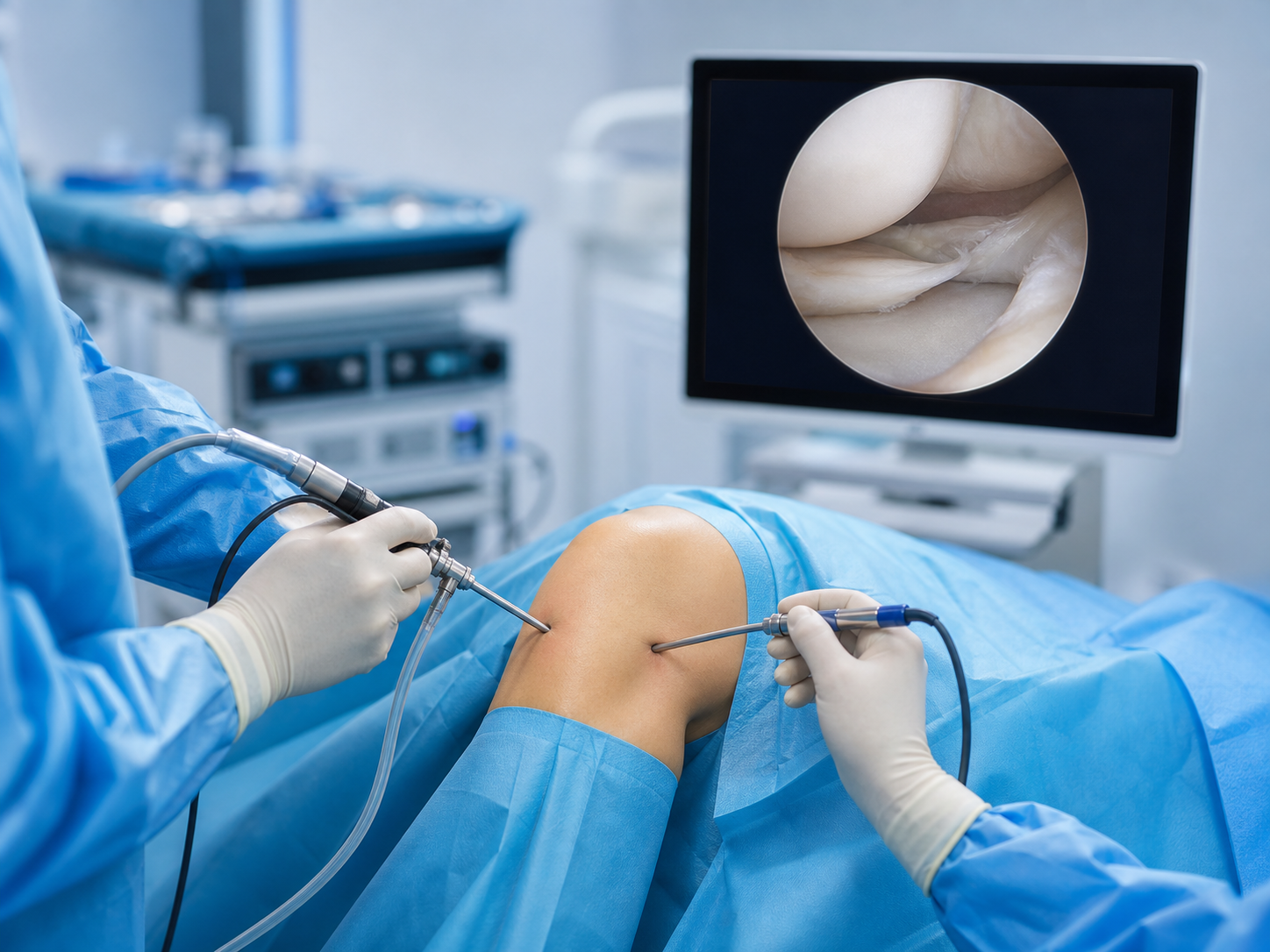
Arthroscopy uses a pencil-thin camera inserted through incisions the size of a buttonhole, letting the surgeon see inside the joint magnified and treat the problem through a second small portal.
It is used for meniscus tears, ligament reconstruction, rotator cuff repair, shoulder stabilisation, cartilage procedures and removal of loose bodies.
Most procedures are day-care or single-overnight stays. Anaesthesia is usually regional, and patients are up and moving within hours.
Because muscle and capsule are not cut open, pain is lower, infection risk is reduced and physiotherapy can start almost immediately — which is what ultimately determines the outcome.
Bring your recent scans, list your medications, and follow the fasting instructions given at the pre-operative visit.
About the author
Dr. Shreyas M.J
Consultant Orthopaedic Surgeon in Mysuru specialising in arthroscopy of the knee and shoulder, joint replacement, foot & ankle surgery and trauma care. Fellowship-trained in arthroscopy and sports medicine (India, Australia and Thailand) and Assistant Professor at JSS Hospital.
Read full profile →This article is general information and not a substitute for a clinical examination. For advice on your specific problem, book a consultation at the clinic.