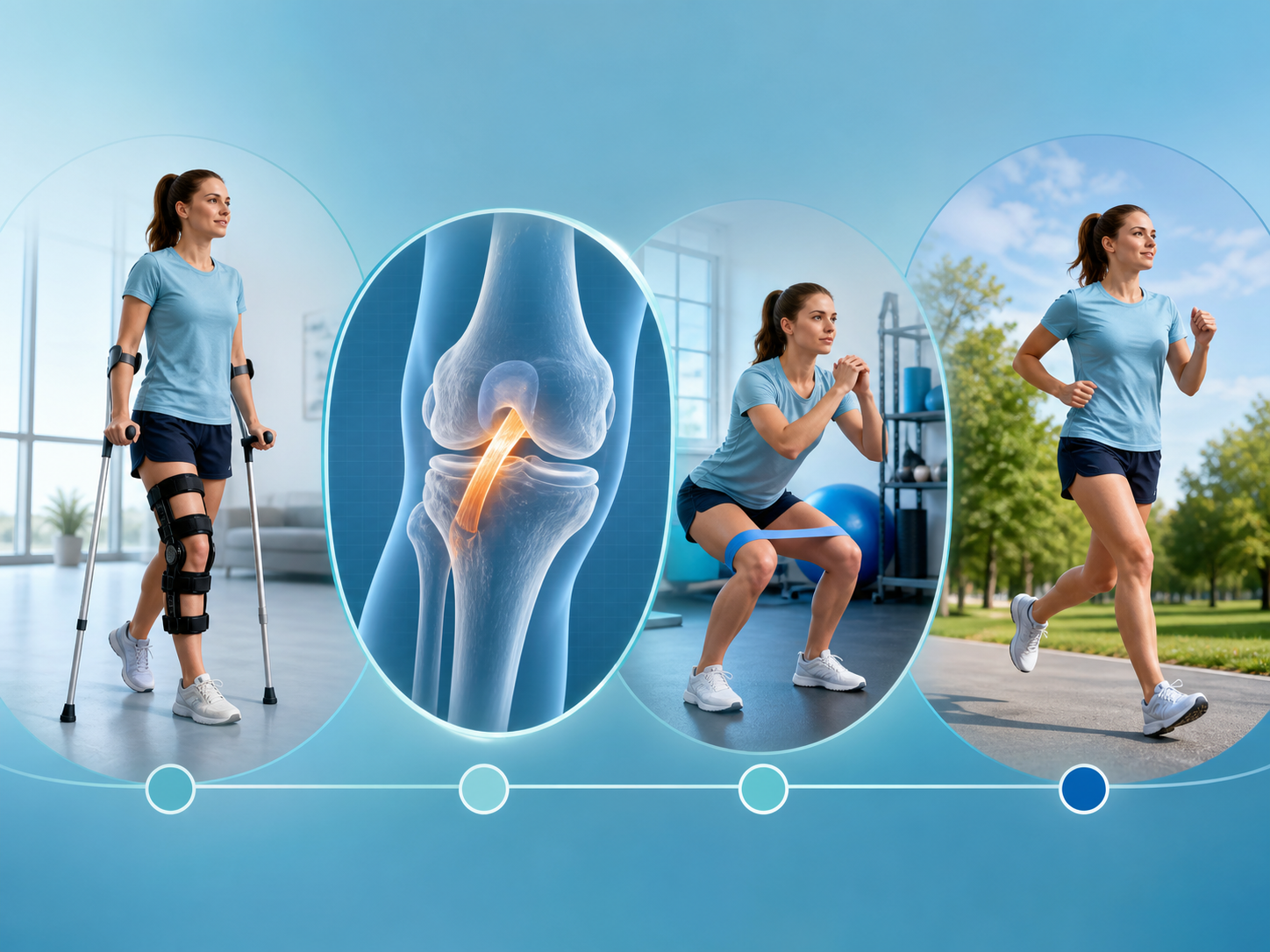

The injuries we see most
Across recreational and competitive athletes, five injuries dominate the clinic list: ACL tears, lateral ankle sprains, hamstring strains, rotator cuff pain and patellofemoral or runner's knee. They look different but share the same underlying causes — a sudden jump in training load, weak hip and trunk muscles, poor landing and cutting technique, and too little recovery.
That is encouraging, because it means most of them are preventable with a few unglamorous habits rather than expensive equipment.
Warm up the right way
Five to ten minutes of light cardiovascular work followed by dynamic movements — leg swings, lunges, skipping, gradual accelerations — prepares muscle and tendon far better than static stretching, which is best saved for after the session.
Structured neuromuscular warm-up programmes that combine running, strength and landing drills have been shown in large studies to cut ACL and ankle injury rates substantially in field-sport athletes. Fifteen minutes before training is a genuinely good investment.
Respect load progression
Most overuse injuries follow a sudden increase in volume or intensity, often after a break or in the weeks before an event. A useful rule of thumb is to raise weekly distance or intensity by no more than about ten percent.
Keep one or two easy days between hard sessions, and treat sleep as part of training. Tissue adapts during recovery, not during the workout itself.
Build strength where it matters
Strong glutes, hamstrings, calves and trunk muscles control the knee and ankle during landing and cutting. Two sessions a week of squats, lunges, hip bridges, Nordic hamstring curls and calf raises protects the joints that would otherwise absorb the force.
For overhead athletes, scapular stabilisation and rotator cuff work prevents the impingement pain that so often becomes a chronic shoulder problem.
Technique, footwear and surfaces
Learning to land softly with the hips and knees bent and the knees tracking over the toes reduces the knee valgus position associated with ACL injury. A coach or physiotherapist can correct this in a few sessions.
Replace worn-out shoes, match footwear to the surface, and tape or brace an ankle that has been sprained before — a previous sprain is the strongest single predictor of the next one.
Know when to stop and when to get it checked
Muscle soreness that eases as you warm up is usually fine. Sharp joint pain, swelling, a pop at the time of injury, or a joint that gives way is not. Training through those signs is what turns a two-week problem into a season-ending one.
If swelling or instability persists beyond a few days, get an assessment. Early diagnosis of a meniscus or ligament injury protects the cartilage from long-term damage and usually shortens the total time away from sport.
About the author
Dr. Shreyas M.J
Consultant Orthopaedic Surgeon in Mysuru specialising in arthroscopy of the knee and shoulder, joint replacement, foot & ankle surgery and trauma care. Fellowship-trained in arthroscopy and sports medicine (India, Australia and Thailand) and Assistant Professor at JSS Hospital.
Read full profile →This article is general information and not a substitute for a clinical examination. For advice on your specific problem, book a consultation at the clinic.