
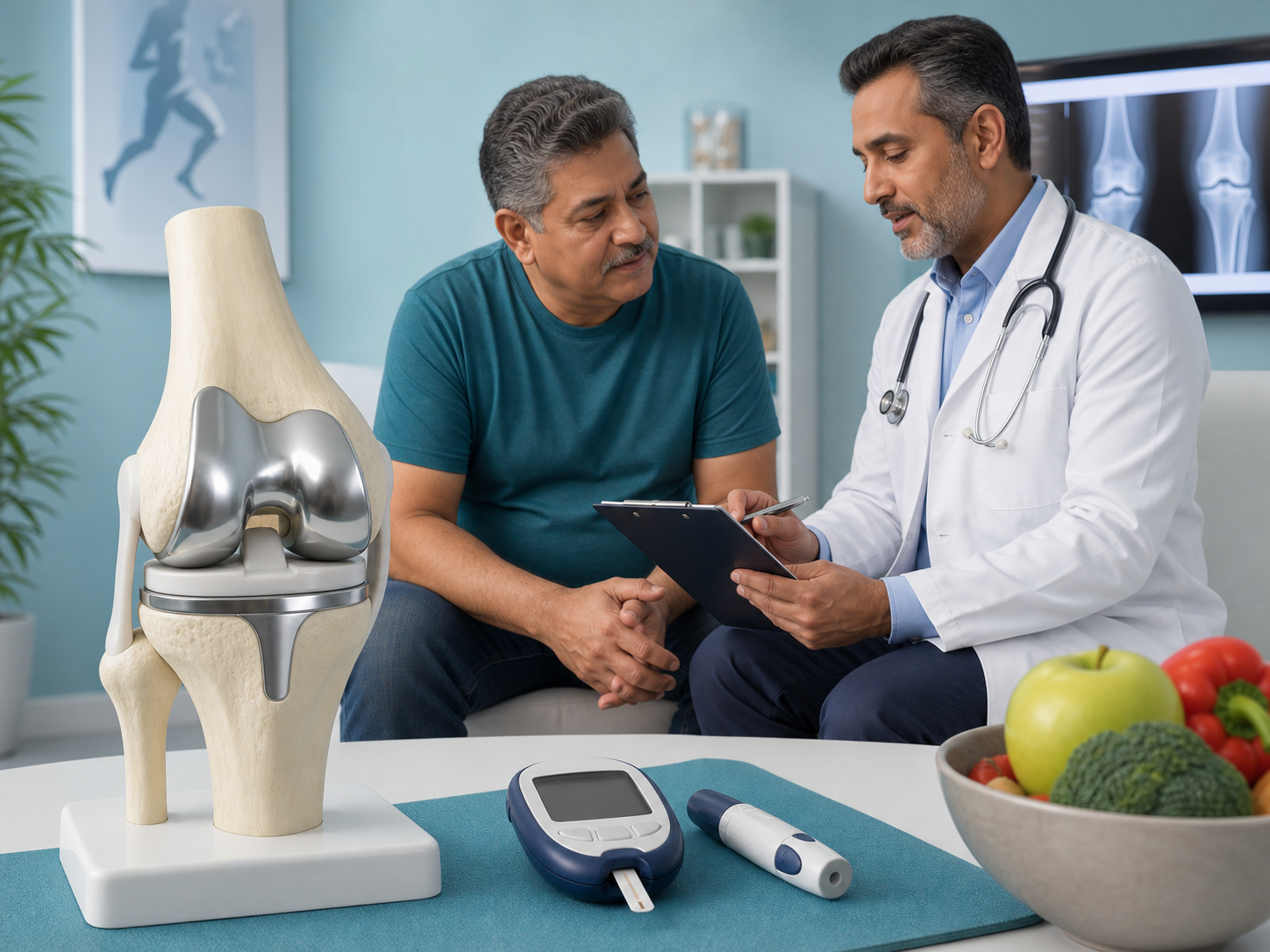
Diabetes does not rule out surgery
Knee replacement is one of the most reliably successful operations in orthopaedics, and patients with diabetes benefit from it just as much as anyone else. What changes is the preparation. Uncontrolled blood sugar impairs the immune response, slows wound healing and raises the risk of infection around an implant — a complication worth every effort to avoid.
The good news is that this risk is largely modifiable. Patients whose sugars are well controlled before and after surgery have outcomes close to those without diabetes.
The HbA1c target
Before elective surgery we look for an HbA1c below 7.5%, and ideally under 7%. This single number reflects average control over the previous three months and predicts wound complications better than a one-off fasting sugar.
If it is higher, surgery is postponed while your physician adjusts treatment. Waiting six to twelve weeks to bring control into range is far preferable to treating a deep implant infection, which can mean further operations and months of antibiotics.
Pre-operative checks
A diabetic pre-operative work-up goes beyond routine blood tests. Kidney function is checked because it affects anaesthesia and pain medication. A cardiac assessment is done since silent coronary disease is more common in long-standing diabetes.
The feet and skin are examined carefully for ulcers, fungal infection or cracks, all of which are potential sources of bacteria. A dental review matters for the same reason — an untreated dental abscess can seed a new joint through the bloodstream.
On the day and in hospital
Surgery is usually scheduled first on the operating list so the fasting period is short. Blood glucose is monitored through the day and insulin adjusted, often with a sliding scale, because both high and low sugars cause problems.
Prophylactic antibiotics, meticulous sterile technique, careful soft-tissue handling and early mobilisation on the day of surgery all lower the complication rate. Most diabetic patients still go home within two to four days.
Rehabilitation and healing
Wound checks are more frequent after discharge, and stitches or staples may be left slightly longer. Any redness, discharge, increasing pain or fever should be reported immediately rather than watched at home.
Where diabetic neuropathy has reduced sensation in the feet, balance training becomes a bigger part of physiotherapy, and a walking aid is often used a little longer as a precaution. Progress may be slightly slower, but the destination is the same.
Long-term outlook
With good glycaemic control, long-term pain relief, function and implant survival in diabetic patients are comparable to everyone else. Continue regular diabetes follow-up, keep the feet healthy, stay active, and mention your joint implant before any dental or surgical procedure so antibiotic cover can be considered.
If knee pain is limiting your walking and you are worried that diabetes disqualifies you, come in for an assessment. In most cases the answer is not no — it is not yet, and here is the plan.
About the author
Dr. Shreyas M.J
Consultant Orthopaedic Surgeon in Mysuru specialising in arthroscopy of the knee and shoulder, joint replacement, foot & ankle surgery and trauma care. Fellowship-trained in arthroscopy and sports medicine (India, Australia and Thailand) and Assistant Professor at JSS Hospital.
Read full profile →This article is general information and not a substitute for a clinical examination. For advice on your specific problem, book a consultation at the clinic.